
This Lake Manyara National Park Guide covers everything you need to know before visiting one of Tanzania’s most beautiful safari destinations. Located at the foot of the Great Rift Valley escarpment, Lake Manyara National Park is famous for its tree-climbing lions, diverse birdlife, and stunning landscapes. Whether you are planning your first safari or returning to Tanzania, this Lake Manyara National Park Guide will help you plan the perfect adventure.
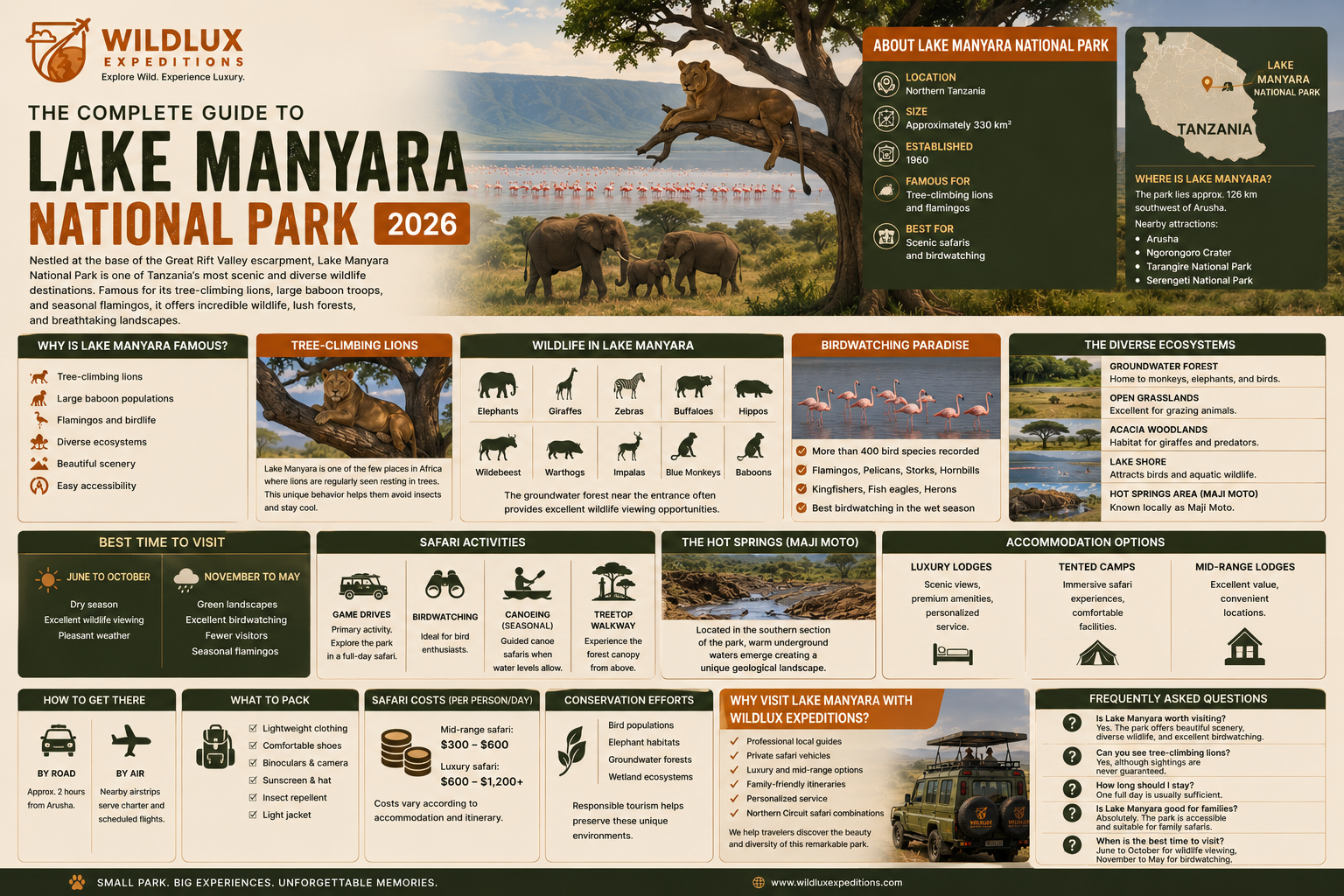
Nestled at the base of the Great Rift Valley escarpment, Lake Manyara National Park is one of Tanzania’s most scenic and diverse wildlife destinations. Although smaller than many of Tanzania’s famous parks, Lake Manyara offers exceptional wildlife viewing, lush forests, abundant birdlife, and spectacular landscapes.
The park is especially famous for its tree-climbing lions, large troops of baboons, and seasonal flamingo populations that gather along the shores of the lake.
For travelers exploring Tanzania’s Northern Safari Circuit, Lake Manyara provides a perfect introduction to the country’s remarkable wildlife and natural beauty.
About Lake Manyara National Park
Lake Manyara National Park was established in 1960 and covers a narrow strip of land between the Great Rift Valley escarpment and Lake Manyara itself.
Quick Facts
| Information | Details |
|---|---|
| Location | Northern Tanzania |
| Size | Approximately 330 km² |
| Established | 1960 |
| Famous For | Tree-climbing lions and flamingos |
| Best For | Scenic safaris and birdwatching |
Nearly two-thirds of the park is covered by the lake during certain times of the year.
Where Is Lake Manyara National Park?
The park lies approximately 126 kilometers southwest of Arusha.
Nearby attractions include:
Its convenient location makes it an ideal first or last stop on a Northern Circuit safari.
Why Is Lake Manyara Famous?
Lake Manyara National Park is renowned for:
- Tree-climbing lions
- Large baboon populations
- Flamingos and birdlife
- Diverse ecosystems
- Beautiful scenery
- Easy accessibility
The park offers an impressive variety of habitats within a relatively small area.
Tree-Climbing Lions
Lake Manyara is one of the few places in Africa where lions are regularly seen resting in trees.
Although not guaranteed, sightings of these famous tree-climbing lions remain one of the park’s major attractions.
Researchers believe the behavior may help lions avoid insects and enjoy cooler temperatures.
Wildlife in Lake Manyara National Park
Despite its modest size, the park supports a remarkable variety of wildlife.
Common animals include:
- Elephants
- Giraffes
- Zebras
- Buffaloes
- Hippos
- Wildebeest
- Warthogs
- Impalas
- Blue monkeys
- Baboons
The groundwater forest near the entrance often provides excellent wildlife viewing opportunities.
Birdwatching Paradise
Lake Manyara is one of Tanzania’s best birding destinations.
More than 400 bird species have been recorded.
Notable species include:
- Flamingos
- Pelicans
- Storks
- Hornbills
- Kingfishers
- Fish eagles
- Herons
Birdwatching is especially rewarding during the wet season.
The Diverse Ecosystems
One of the park’s greatest strengths is its ecological diversity.
Visitors pass through:
Groundwater Forest
Home to monkeys, elephants, and birds.
Open Grasslands
Excellent for grazing animals.
Acacia Woodlands
Habitat for giraffes and predators.
Lake Shore
Attracts birds and aquatic wildlife.
Hot Springs Area
Known locally as Maji Moto.
Best Time to Visit Lake Manyara National Park
The park can be visited throughout the year.
June to October
- Dry season
- Excellent wildlife viewing
- Pleasant weather
November to May
- Green landscapes
- Excellent birdwatching
- Fewer visitors
- Seasonal flamingos
Each season offers unique experiences.
Safari Activities in Lake Manyara National Park
Game Drives
The primary safari activity.
Most visitors spend a full day exploring the park.
Birdwatching
Ideal for bird enthusiasts.
Canoeing (Seasonal)
Water levels sometimes allow guided canoe safaris.
Treetop Walkway
Visitors can experience the forest canopy from elevated walkways.
The Hot Springs (Maji Moto)
Located in the southern section of the park, the hot springs offer a fascinating geological attraction.
The warm waters emerge from underground and create a unique landscape.
Accommodation Near Lake Manyara National Park
Visitors can choose from:
Luxury Lodges
- Scenic views
- Premium amenities
- Personalized service
Tented Camps
- Immersive safari experiences
- Comfortable facilities
Mid-Range Lodges
- Excellent value
- Convenient locations
Many accommodations are located near the park entrance.
How to Reach Lake Manyara National Park
By Road
- Approximately 2 hours from Arusha.
By Air
Nearby airstrips serve charter and scheduled flights.
Lake Manyara is commonly included in Northern Circuit itineraries.
What to Pack
Bring:
- Lightweight clothing
- Comfortable shoes
- Binoculars
- Camera
- Sunscreen
- Hat
- Insect repellent
- Light jacket
Safari Costs
Average safari prices:
- Mid-range safari: $300–$600 per person/day
- Luxury safari: $600–$1,200+ per person/day
Costs vary according to accommodation and itinerary.
Conservation Efforts
Lake Manyara plays an important role in protecting:
- Bird populations
- Elephant habitats
- Groundwater forests
- Wetland ecosystems
Responsible tourism helps preserve these unique environments.
Why Visit Lake Manyara With Wildlux Expeditions?
Wildlux Expeditions offers carefully designed itineraries that maximize your experience in Lake Manyara.
Our services include:
✓ Professional local guides
✓ Private safari vehicles
✓ Luxury and mid-range options
✓ Family-friendly itineraries
✓ Personalized service
✓ Northern Circuit safari combinations
We help travelers discover the beauty and diversity of this remarkable park.
Frequently Asked Questions
Is Lake Manyara worth visiting?
Yes. The park offers beautiful scenery, diverse wildlife, and excellent birdwatching.
Can you see tree-climbing lions?
Yes, although sightings are never guaranteed.
How long should I stay?
One full day is usually sufficient.
Is Lake Manyara good for families?
Absolutely. The park is accessible and suitable for family safaris.
When is the best time to visit?
June to October offers excellent wildlife viewing, while November to May is ideal for birdwatching.